
.jpg)
A few weeks ago we stood on stage at Immersive Tech Week in Rotterdam, in the corporate track, for a session called "What Actually Works: Real XR Use Cases in Enterprise." We did it together with Peter Faulhaber of Strukton because Peter's team didn't buy a VR training. They built their own. And what they learned along the way is the reason we wanted to write this down.
The title of our talk could just as easily have been the title of this post: VR training that's built to change.
If you've been around enterprise VR for a while, you've seen it. A project kicks off in the innovation department. It launches with a lot of noise - a press moment, a pilot, a headset on everyone's desk for a week. And a year later, it's barely been touched.
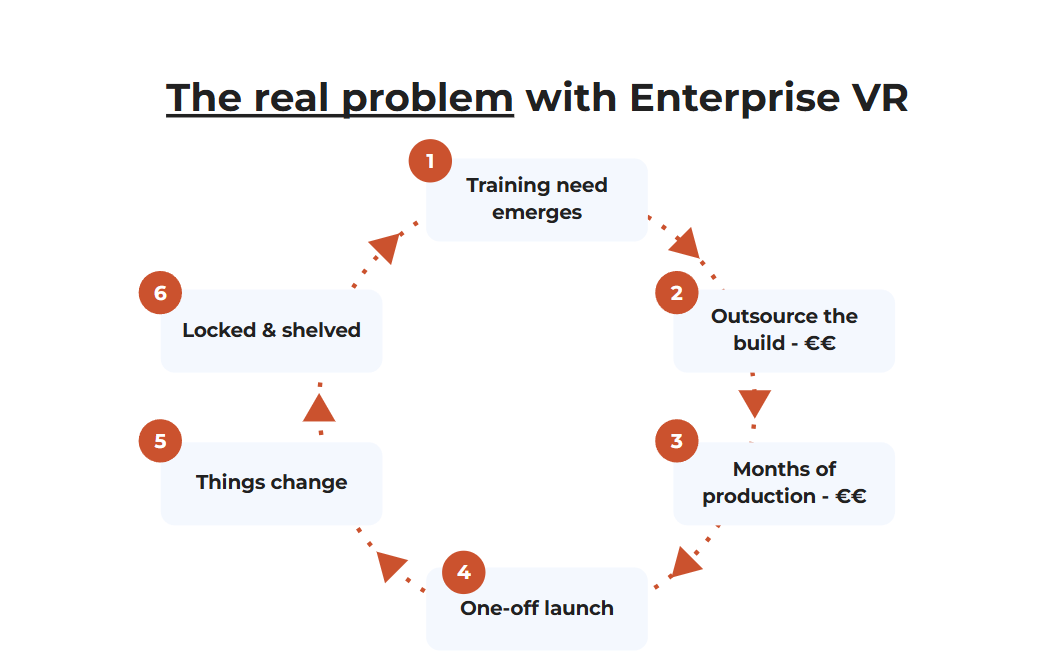
The problem is structural, and it usually goes like this:
The day it shipped is the day it froze. The content is now slightly wrong, nobody owns the means to fix it, and quietly, people stop using it.
Every organisation knows its work will change and almost nobody designs their VR training for it.
Procedures get revised. Equipment gets replaced. Safety requirements tighten. New people join who need a slightly different version. Change really is the baseline for operational training. A training that can't move with the work has a shelf life measured in months.
So the question isn't "how do we make a great VR scenario?" The better question is "how do we make VR training we can keep changing?"
This is exactly what Strukton set out to do. They train Strukton mechanics at the Strukton Academy on skills and safety procedures including working with a KROL, a crane that operates on the rail track. You can't safely put a trainee on a live crane on an active track, and you can't easily bring the machine into a classroom.
So they brought the classroom to the machine. Their own L&D team built the training themselves, on a platform designed for it. The loop looks like this:
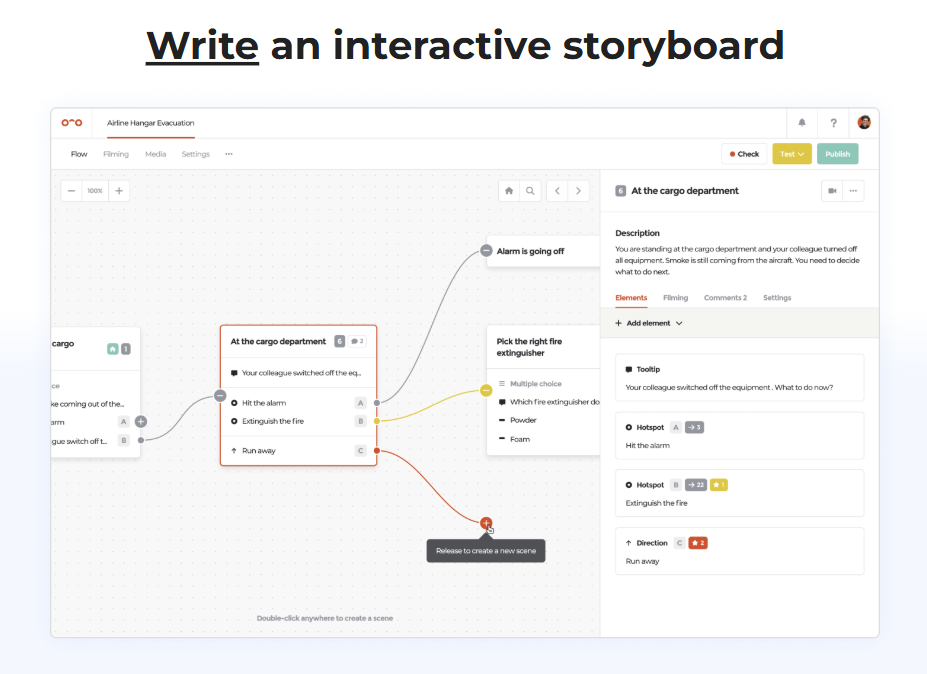
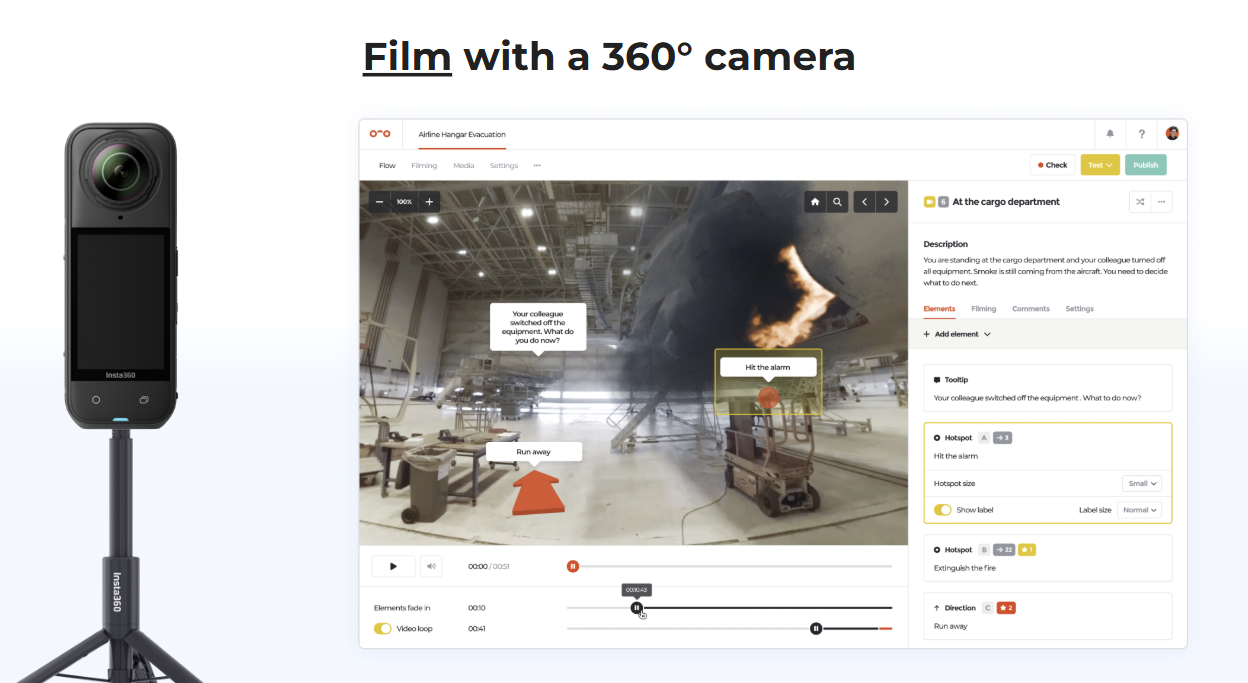

And then the most important part: when the procedure changes next year, Strukton changes the training themselves.
No, an agency is actually a good option. They have capacity and expertise to change scenarios quickly and more professionally than many in-house teams.
Some of the best VR training out there is built by specialist agencies and training partners. They bring instructional design craft, production skill, and an outside perspective that an internal team often can't. If you don't have the time or the in-house expertise to get started, a good partner is one of the smartest ways to begin.
The point isn't in-house instead of agencies. The point is the model. A great agency builds on a platform you can both access, co-creates with you instead of disappearing into a black box, and hands you the keys when it's done so when the work changes, you (or they) can update it in minutes rather than rebuilding from scratch. Whether your own L&D team holds the pen or a partner does, the principle is the same:
If there's one thing we'd ask you to take away, it's this: bring a built-to-change mindset to VR training before you produce a single scenario.
That means choosing for ownership over a one-off deliverable. It means valuing how easily and cheaply you can update content as much as how the first version looks. And it means acquiring a platform that makes iteration genuinely fast because the training you can improve every quarter will, over time, beat the polished one that froze on launch day.
The technology was never the hard part. The value comes from how thoughtfully the training is owned, designed, and kept alive.
That's what Strukton understood, and it's what made their VR training stick. If you'd like to talk through what building this capability could look like for your organisation in-house, with a partner, or somewhere in between you can always reach out to us. We're happy to think it through with you.


.png)
.jpg)