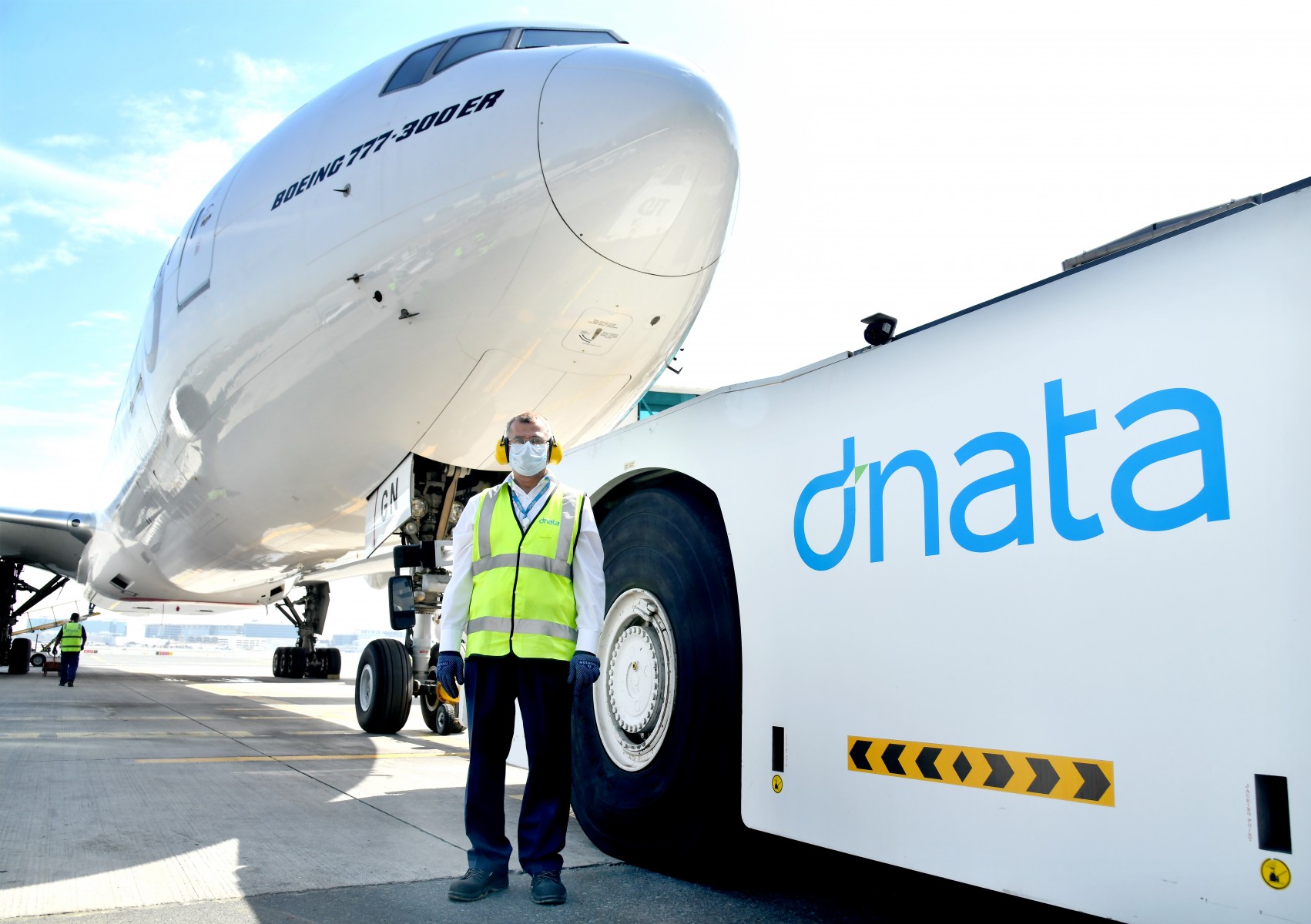
dnata is a leading global air and travel services provider, operating ground handling, cargo, travel, catering and retail services across more than 30 countries.
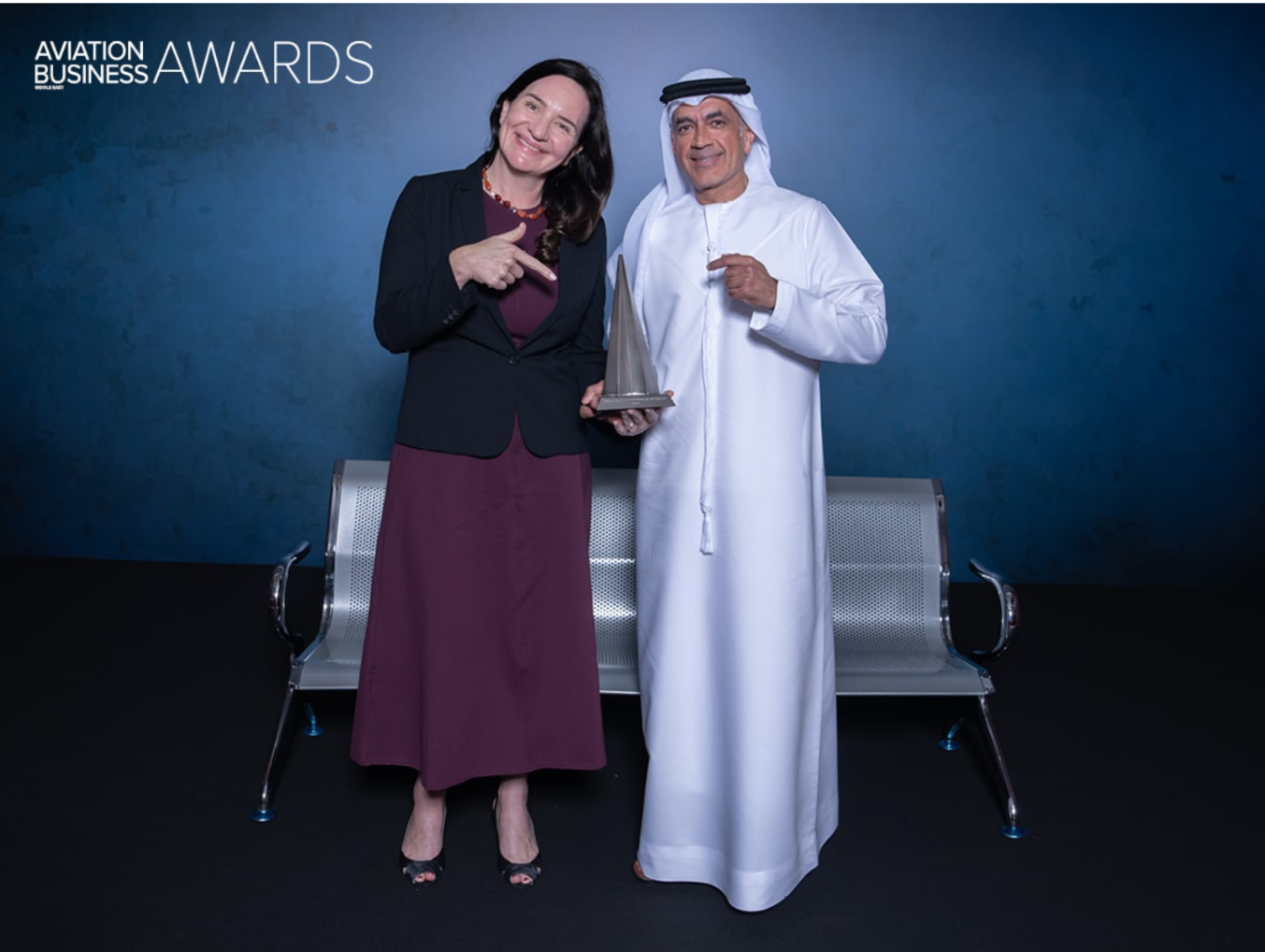
To strengthen safety awareness among airside loading supervisors, dnata partnered with Warp VR to build a VR training programme in Dubai. The project won Digital Transformation Project of the Year at the Aviation Business Middle East Awards 2025.
Airside loading supervision is a demanding discipline. Supervisors work in a fast-moving environment, with aircraft, equipment, people, and time pressure all happening at once. dnata wanted to raise supervisor performance across the board, giving every supervisor consistent practice at observing, assessing, and deciding when to step in.
The established training already worked well. It was built on classroom sessions, practical exercises, and time on the ramp itself. What it could not guarantee was consistency of exposure. Hands-on learning depended on what came up during a given shift, so two supervisors completing the same programme might practise in completely different situations. One walked away better prepared than the other. Some of the most instructive moments only occur during live flights or in restricted areas, which made them difficult to build into training on demand.
"The challenge was how to expose our people to realistic operational situations without impacting live operations or compromising security and safety requirements," the team explains. "Traditional training can explain standards, but it cannot always recreate the pressure and complexity of a live ramp environment."
VR let dnata recreate exactly the situations that were hardest to arrange on the ramp itself.
The project started as a proof of concept, bringing in training designers, operational managers, safety experts, and frontline representatives from day one. Scenarios were built from real safety observations, operational data, and input from subject matter experts. SMEs validated that each scenario reflected real operational risk. The training team handled the design and build.
The scenarios place supervisors airside, observing teams working around aircraft and ground support equipment. Learners look around, maintain situational awareness, identify unsafe positioning or movement, and decide when to intervene. Some scenarios involve several things happening at once, requiring active prioritisation under pressure.
From idea to live training took roughly four months, including internal alignment and stakeholder engagement. The design and development work itself took no more than six weeks, covering training needs analysis, scenario design, filming, post-production, VR build, testing, and refinement.
Overall safety has improved, and dnata is still working to determine the exact empirical impact of VR training compared to previous training regimes.
What they can point to is engagement and clarity. Learner surveys and feedback show employees found the training engaging, realistic, and relevant to their work. Post-training observations and on-site interviews found that in 10 out of 10 cases, participants who completed the VR training showed focused awareness of hazards and could clearly explain what to observe and act on during aircraft loading activities. The format also encouraged reflection on what they noticed, what they missed, and how they would act in real operations.
"While we are not presenting this as proven incident reduction, the early results show strong engagement, practical relevance, improved clarity on hazard observation, and positive behavioural indicators," the team says.
"This was not only a training achievement. It involved operations, SMEs, and frontline colleagues working together to create something practical and relevant," the team adds. "It gave us confidence that VR was being used for the right reason. Not because it was new technology, but because it helped create a safer and more realistic way to practise critical skills."
Looking ahead, dnata wants to build on the proof of concept with a more structured approach, including additional airside scenarios around hazard identification and active supervision. It is also exploring VR for customer-facing roles such as check-in and service counters, to support conflict resolution and service recovery.
"Start with the problem, not the technology," the team notes. "VR should not be used just because it is new or exciting. It should solve a real training challenge. In aviation and ground handling, VR is valuable where training access is limited by safety, security, live operations, or the difficulty of recreating realistic scenarios. Involve operations and SMEs early, because realism is what makes the experience meaningful."